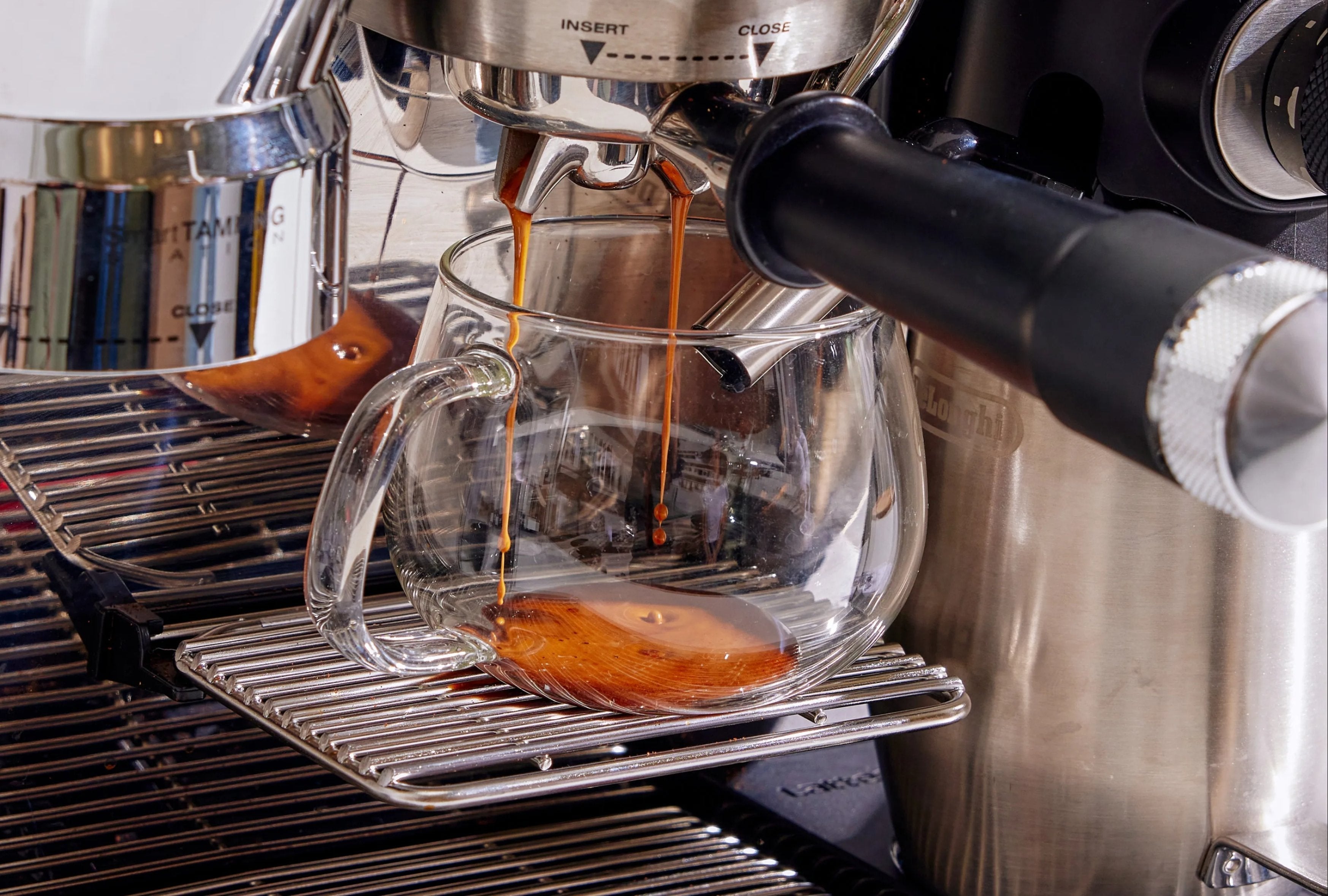
If you’ve ever pulled a shot and noticed a beautiful caramel-coloured layer sitting on top, that’s crema – one of the most recognisable signs of a freshly made espresso.
But what actually is crema? Let’s break it down so you can understand what it means for your home espresso.
What is crema?
Crema is the layer that forms on top of a shot of espresso. It’s created when hot water under pressure meets freshly ground coffee, which releases CO₂ and natural oils that then emulsify and rise to the surface.
Think of it like the first impression of your espresso – a sign your beans are fresh and your extraction is working.

Why does crema matter?
It's a sign of freshness
Coffee that has been recently roasted and rested naturally produces more crema because it holds more CO₂. If your beans are very old or stale, crema tends to be thin or disappear quickly.
It tells you how your extraction is going
Crema can help diagnose what’s happening during your shot, like a little window into your technique.
Thick, dark crema: grind may be too fine (over-extraction)
Pale, bubbly crema: grind may be too coarse (under-extraction)
No crema: beans may be stale or machine pressure too low
You don’t need to obsess over it, but it’s a useful indicator when dialling in.
It adds texture and aroma
Crema carries the aromatic oils that give a shot of espresso its deep, complex smell. It also adds a silky mouthfeel on the first sip, helping your espresso feel rounder and richer.
It contributes to the overall flavour
Here’s the surprising part: crema isn’t where the sweetest flavours live. In fact, it can be a little bitter.
But crema helps:
- Stabilise the espresso
- Add body
- Carry aromas
- Create that espresso experience you expect from a cafe
So while crema isn’t the sole indicator of flavour, it contributes to the overall experience.

What affects crema?
Your roast level
Medium to medium-dark roasts (like Smooth Medium and Rich Strong) will have a balanced crema.
Very dark roasts will have thinner, darker crema and very light roasts will have a pale, finer crema.
Your machine pressure
Home machines produce crema differently than commercial machines. Because our beans are roasted specifically for home machine pressure levels, you'll naturally get a more stable, reliable crema.
Your grind size
Too coarse will mean a weak crema, while too fine will yield a dark, thick crema, but have a bitter taste. We're aiming for just right: a warm golden crema with balanced flavour.
Roast date of your beans
If your crema suddenly disappears, your beans may simply be past their peak.

How to get better crema at home
Use beans made for home espresso
Dial in your grind
Keep your machine clean

While it’s not the only measure of good espresso, crema is a beautiful sign your beans, grind, and machine are working together.
And when you’re using blends roasted specifically for home machines – like Smooth Medium and Rich Strong – getting that velvety, golden layer becomes much easier.
Ready for better results at home? You can find The Espresso Club™ at your local Woolworths or shop online anytime.